The official WhatsApp Business Platform vs grey gateways
Unofficial WhatsApp gateways promise the official channel without the paperwork, and the price is the one asset you cannot replace: the number your customers already have saved. Here is what the official platform actually gives you, how templates and campaigns behave in practice, and the missed-call automation almost nobody sets up.
15 July 2026 · 8 min read
On this page
- 01The number printed on the van
- 02What the official platform actually buys you
- 03How grey gateways break, and what breaks with them
- 04Templates are the part nobody explains
- 05Running a campaign without burning the number
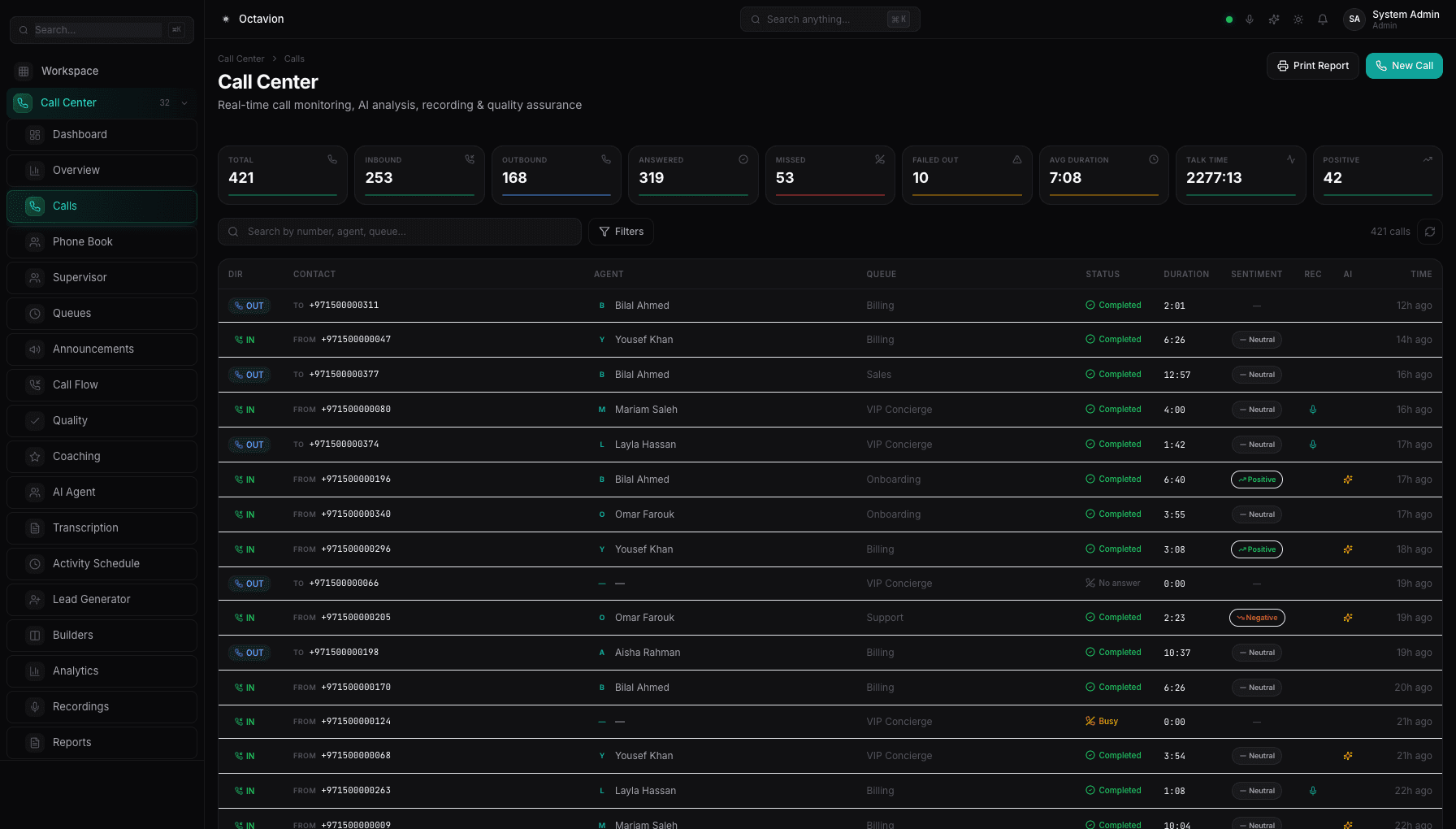
- 06The missed call is the best trigger you own
- 07One thread per customer, not one per employee
- 08Before you connect a number
The number printed on the van
The number your customers message is probably the one on your vehicles, your invoices, your Google listing and four years of business cards. It sits inside someone's personal WhatsApp, on a phone that goes home every evening. When that person is on leave, enquiries sit unread. When they resign, the conversations leave with them.
So you look for something better, and within a week someone offers a shortcut: unlimited messaging, no approvals, no verification, any number connected in ten minutes. It looks like the official route without the paperwork.
It is not. It is a reseller of an unofficial gateway, and the thing it puts at risk is the one asset in this story you cannot replace — the number itself. This guide covers what the official WhatsApp Business API in the UAE actually gives you, how templates and campaigns behave once you are on it, and the automation almost nobody sets up: turning a missed call into a WhatsApp message before the customer dials the next number on their list.
What the official platform actually buys you
The official route is the Meta Business Platform. You register a business, verify it, attach a phone number to it, and from that point the number belongs to a business asset rather than to a handset. Nobody carries it home.
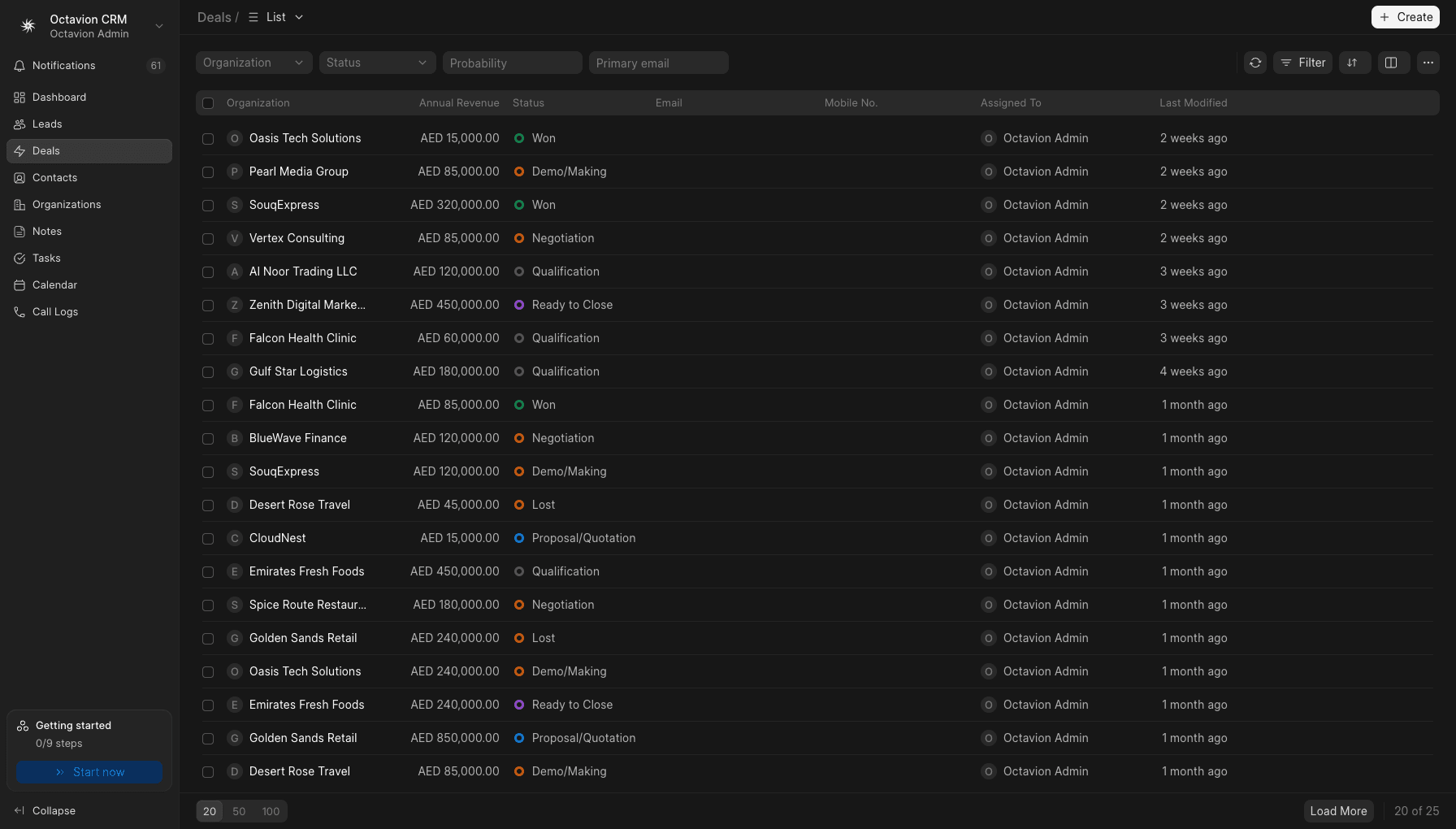
Three things follow from that, and they are the whole argument. The number is bound to your verified business, so staff changes do not move it. Several people can serve the same number at once, with the history visible to all of them instead of living on one device. And the messages become data you can attach to a customer record, which is what makes the channel useful to the CRM where deals and call history already live rather than just another inbox to check.
The cost is real and worth stating plainly: verification takes effort, business-initiated messages must follow the template rules described below, and Meta charges for messaging separately from the seats you buy. That is the trade. You accept a rulebook and you keep the number.
How grey gateways break, and what breaks with them
Unofficial gateways work by driving a normal WhatsApp session the way a person would — automating the web client, or running a modified app on a server somewhere. There is no agreement with Meta behind it. The provider is simulating a human, at volume, from a data centre.
That pattern is exactly what abuse detection looks for. Sudden outbound volume from a number with no inbound history, identical text sent to hundreds of recipients, people tapping "block", a session appearing from an unusual place — any of these can end the number. Not suspend the gateway. End the number.
When it happens, three things go wrong at once. The number stops receiving messages from every customer who has ever saved it. There is no support desk to escalate to, because you were never a customer of the platform. And the history — every quote, every agreed price, every delivery address — was inside a system you do not own and often cannot export.
The failure is also quiet. Messages appear to send while delivery drops, and the first real signal is the week your enquiries fall by half.
Templates are the part nobody explains
Here is the mechanic that surprises every team in their first week. You cannot simply write to a customer whenever you like.
When a customer messages you, a service window opens — roughly a day — during which your team can reply freely in ordinary conversational text. Answer inside that window and nothing special is required. Once it closes, or if you are starting the conversation yourself, you must send a pre-approved template: wording you submitted to Meta in advance, with named placeholders for the parts that change.
Templates are categorised by intent, and the category matters more than the phrasing. A utility template carries something the customer expects because of a transaction — an order confirmation, a delivery slot, an appointment reminder, a payment receipt. A marketing template carries something they did not expect: an offer, a launch, a re-engagement nudge. Authentication templates carry one-time codes and nothing else.
Teams get rejected for the same reasons repeatedly: dressing a promotion up as a notification, submitting a template that is little more than a bare placeholder, or writing one so vague that a reviewer cannot tell what the customer will actually receive. Write it as the customer will read it, keep the category honest, and approval stops being a mystery.
The consequence is architectural. Your best templates are fired by events that already exist in your system — an invoice raised, a job completed, an appointment booked. If those events live in the accounting and stock system that issues the AED invoice, the notification writes itself from real data instead of someone retyping it.
Running a campaign without burning the number
Bulk WhatsApp is where good numbers go to die, and the reason is rarely volume alone. It is sending to people who never asked.
Every number carries a quality signal driven by how recipients react. Blocks and reports push it down; replies and reads hold it up. Fall far enough and your sending limits tighten, which means the campaign you scheduled for Thursday simply does not go out. Recover and the limits open again. A purchased contact list feeds that loop the worst possible input.
So treat consent as infrastructure. Collect it where the customer knows what they are agreeing to — a checkout, an enquiry form, a booking confirmation — and record when and where it was given. Offer a way out in the message itself; an easy opt-out is far cheaper than a block.
Then segment. A reminder about a service genuinely due, sent to two hundred customers who own that product, beats the same text sent to five thousand strangers. Keep the channels in their lanes too: broad announcements to a wide list belong in the email campaign tool, while WhatsApp is for messages a specific person has a specific reason to receive.
Not every conversation needs to start there either. Visitors already on your website are better served by live chat on the site itself, and support conversations with a promised response time belong in the helpdesk with SLA timers and a customer portal, where a ticket has an owner and a clock.
The missed call is the best trigger you own
Ask any UAE business what happens to a call that arrives after hours, or while both agents are talking. The honest answer is usually nothing: the caller hangs up, and if they are shopping, the next number they try belongs to someone else.
That abandoned call is the highest-intent event in your business. Someone wanted to reach you badly enough to dial, and unlike a web visitor they have handed you the one thing a WhatsApp message needs: a mobile number.
Wire the two together. When a call is abandoned in a queue or arrives outside business hours, a utility template goes out within a minute or two: an acknowledgement, a named person who will call back, and an invitation to reply on WhatsApp if typing is easier than talking. The conversation continues in text instead of dying at the dial tone.
Doing this properly needs the telephony side to know a call was abandoned, which is why it belongs with the call centre that runs the queues, IVR and recordings rather than being bolted on as a separate script. Queue callback, voicemail-to-email and a WhatsApp follow-up are three answers to the same problem, and you want them configured in one place.
One thread per customer, not one per employee
The deeper problem with WhatsApp on personal phones is not the ban risk. It is that your customer relationships end up stored in fragments across a dozen devices.
A customer negotiates a price on WhatsApp, confirms by phone, then complains a month later that the delivery date was different. The evidence exists — in a chat on a handset belonging to someone who left in March. Meanwhile the deal on your pipeline board shows two calls and no messages, so the manager reviewing it is reading an incomplete file.
The fix is to make the customer record the destination for every channel. Calls log themselves against the timeline when the dialler and the CRM are one system; WhatsApp threads should land in the same place, visible to whoever picks up next. A handover then becomes a five-second read rather than a phone call to a former colleague.
This is also what makes an assistant useful. The voice-first AI assistant that reads your live business data can only summarise the history it can see. If half the conversation is on a handset, so is half the summary.
Before you connect a number
A short, honest checklist before anyone touches a live line.
- Do not test on your main number. Connect a secondary line first, learn the template workflow on it, and migrate the primary number once the process is boring.
- Own the business account yourself. It should be verified in your company's name, not sitting inside an agency's account with your number in it — that is the grey gateway wearing a suit.
- Write three templates before you apply. One utility notification tied to a real system event, one appointment or delivery reminder, one polite missed-call follow-up. If you cannot name the event that fires each, it is not ready.
- Check where the thread lands. If the next person to serve that customer cannot read it, you have rebuilt the personal-phone problem with better branding.
One instinct sits behind both bad decisions here: the cheap shortcut on messaging is the cheap shortcut on compliance, the same reasoning that leaves a growing business running its books in a spreadsheet — covered in our guide to what a VAT-ready ERP has to do in the UAE, where 5% VAT and a proper audit trail are not optional either.
WhatsApp on the official Meta Business Platform is one of the apps you can switch on beside the CRM and the call centre in the full app catalogue. Two honest caveats: business verification is Meta's process, not ours, and it takes as long as it takes; and the WhatsApp channel setup needs your own Meta business credentials before the first message goes out, so plan a day for paperwork rather than an afternoon.
Everything else — the timeline, the queues, the templates, the missed-call trigger — you can judge for yourself. There is a 7-day trial you can start today, and the per-seat prices in AED sit on one page with nothing hidden underneath. If you would rather read the mechanics first, the product documentation is open to everyone.