Why a CRM without a phone inside it quietly loses deals
Deals rarely die in a meeting. They die in the days after a call nobody wrote down, when the customer rings back and reaches someone who has to ask them to start again. This is a practical look at what breaks when the pipeline and the phone system are two separate products, and what a CRM with telephony in the UAE actually changes for a sales team.
28 July 2026 · 8 min read
The call nobody wrote down
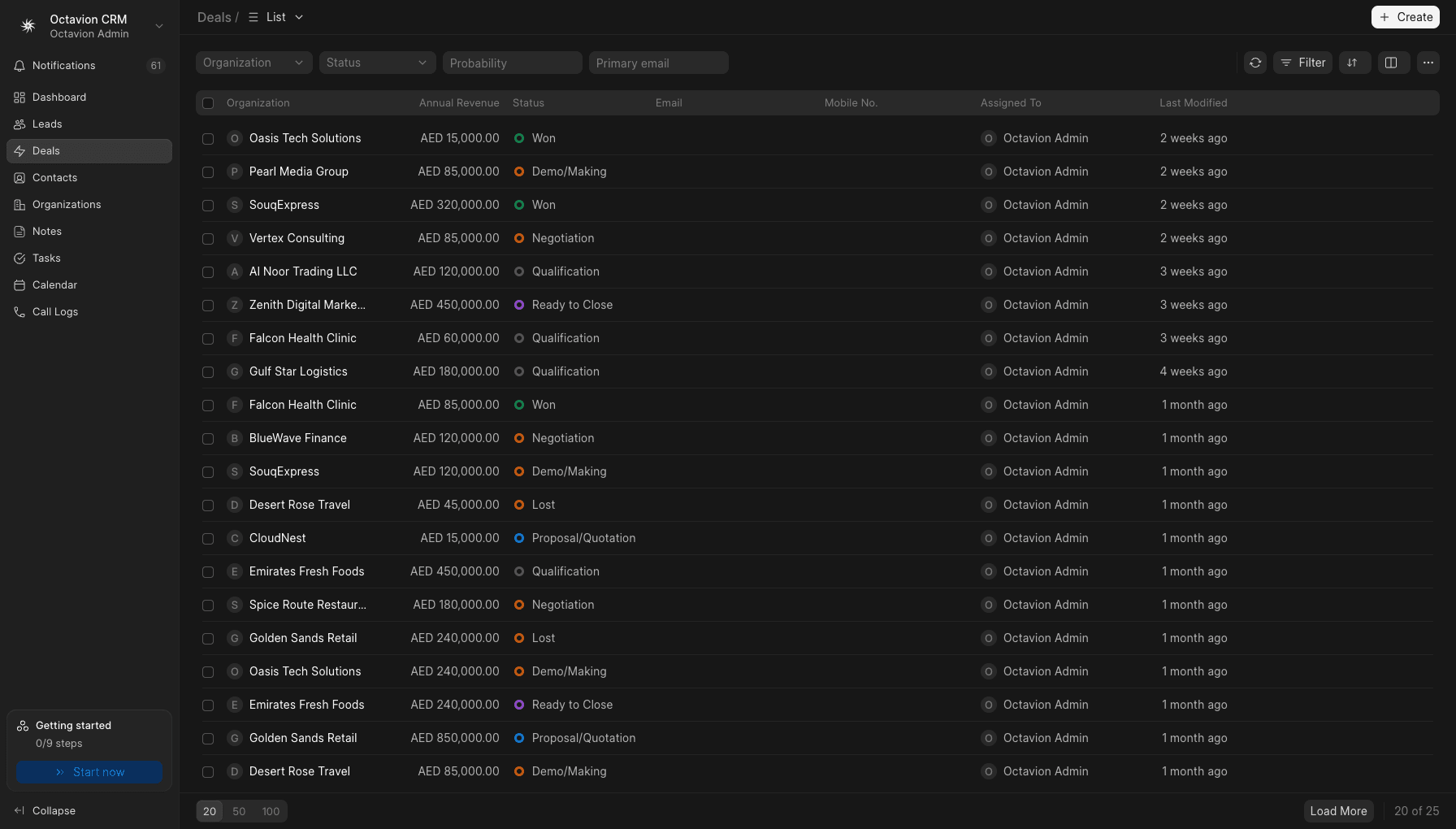
It is Wednesday afternoon and a customer you spoke to nine days ago rings the main line. The call lands with whoever is free. That person opens the deal card, sees a company name, a value, a stage and a last-modified date, and has to ask the customer to explain the whole thing again.
The customer explains it again. They are perfectly polite about it. They also quietly move you a few places down their own list, because a supplier who cannot remember the last conversation is a supplier who will need managing.
Nothing dramatic happened here. Nobody lost the enquiry, nobody ignored an email, nobody was rude. The deal simply lost the one thing keeping it warm, which is continuity, and it lost it because the conversation happened on a phone system that has no idea your pipeline exists.
That is the quiet failure of a sales stack where the telephone and the customer record are two separate products. The record holds whatever somebody remembered to type. Everything said out loud stays in a rep's head: the real objection, the delivery date the customer cannot move, the fact that the person on the call is not the person who signs.
What manual call logging really costs
Ask any sales manager whether the team logs its calls and you get a version of the same answer. Mostly. Eventually. Some of them.
That is not a discipline problem. Manual logging asks a person to stop selling in order to describe selling, and it asks at the worst possible moment, in the seconds after hanging up when the next number is already on screen. So the note is postponed to the end of the day, written from memory, and compressed into "followed up, will call back".
Then something worse happens. Logging becomes selective. The call that went well gets a note, because it is pleasant to write. The call where the customer pushed back hard on price, or went cold, or asked a question nobody could answer, gets skipped. Over a quarter the pipeline fills up with the optimistic half of reality, and that is the half the forecast is built on.
The cost is not the missing note. It is that the deal and the deal record have quietly become two different things, and only one of them is visible to management.
The handover is where deals die
A deal only needs its history at the moment it changes hands, which is exactly the moment the history is missing.
Reps take leave. People move between branches or leave the company. A customer rings late in the day and reaches a different desk. An enquiry that started with a junior rep is escalated to a manager for the closing conversation. Every one of those is a handover, and every handover is a chance for the customer to repeat themselves or, worse, to be told something that contradicts last week.
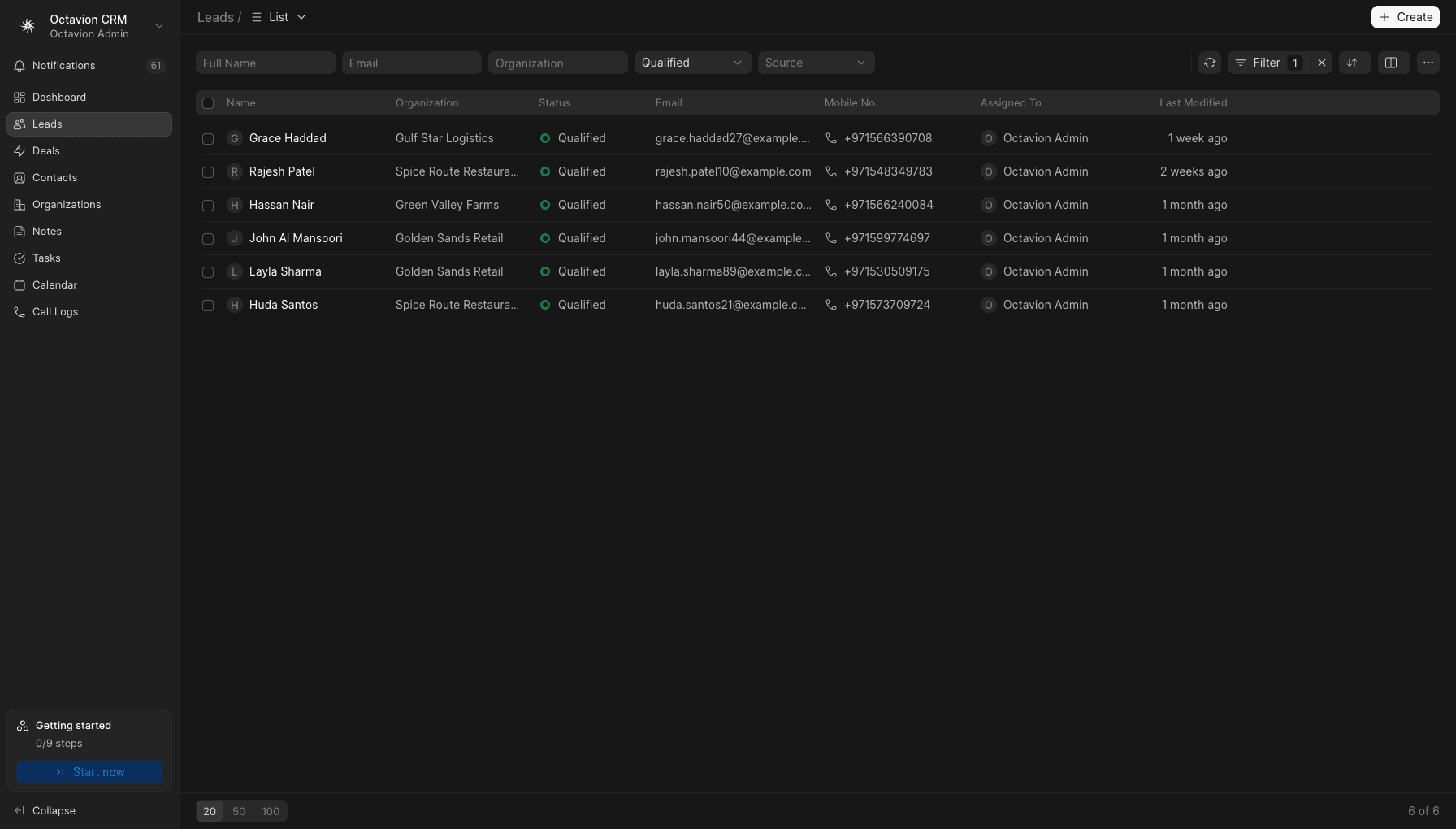
Where calls are attached to the customer, a handover is unremarkable. Whoever picks the deal up scrolls the timeline, sees every call in order with who made it and what came out of it, and carries on the conversation. Where calls live in a separate switchboard report, the handover becomes a research project nobody has time for.
The board view depends on the same thing. A pipeline is only as honest as the activity underneath it. When each card carries its own call history, a stalled deal shows up as a deal nobody has spoken to in eleven days, rather than as a card someone forgot to drag.
What real click-to-call changes
"Click-to-call" is used loosely. Sometimes it means a link that opens a softphone app, or copies the number so you can dial it on your mobile. That is a shortcut, not an integration, and it leaves the logging exactly where it was, which is on the rep.
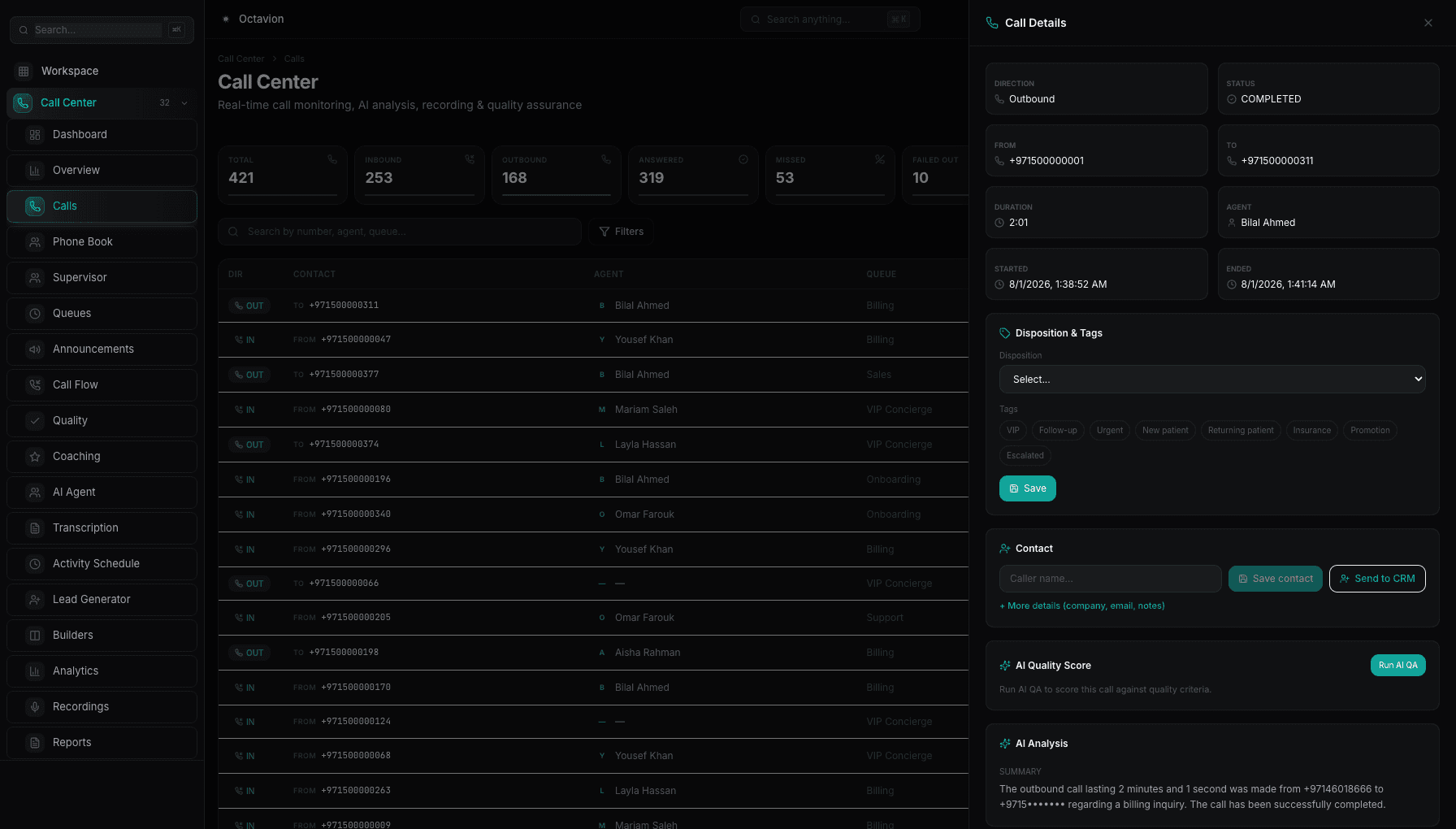
Real click-to-call runs the other way round. You click the number on the customer record and your own headset rings first. You answer, and only then does the platform dial the customer and bridge the two legs together. From that instant the call belongs to the system. It knows which user placed it, which contact it reached, which deal it came from and how long it lasted.
Three practical things follow. Misdialled numbers stop happening, because nobody is retyping digits from a screen. The call goes out on a company number rather than a personal mobile, so the customer's callback reaches the business, and keeps reaching it after that rep leaves. And the log writes itself, with duration and recording, before anyone has decided whether to write a note.
This is the point where the CRM with a leads and deals pipeline and the call center platform that runs queues, IVR and recording stop being two purchases with an integration bolted between them. One login, one customer record, one timeline.
What the system knows after you hang up
Once the call is inside the platform, the useful part begins after it ends.
The recording is attached to the customer rather than filed by extension and date. Transcription turns it into readable text, so the conversation nobody can quite remember becomes something you can scan in half a minute instead of listening to twice. An AI pass produces a summary and a reading on sentiment, and the rep can push that summary straight onto the deal timeline along with the outcome and the next step. The entire logging ritual collapses into reviewing a draft and choosing a disposition.
Treat that draft as exactly what it is: the work of an assistant who listened carefully but was not in the room. It is very good at "customer asked for revised pricing on forty units and needs delivery before month end". It cannot tell you the buyer sounded like he had already chosen somebody else. Read it, correct it, save it. That takes seconds, and seconds is the whole argument.
The same recording has a second life in coaching. A supervisor can listen to a live call, whisper to the agent without the customer hearing, or join the conversation outright, and afterwards score the recording against a quality card you define yourself.
The UAE part of the problem
Some of this is universal. Some of it is specific to selling here.
Business in the Emirates runs on the phone and on messaging far more than on email. A quote sent by email is chased by call. A customer who cannot reach you does not leave a voicemail and wait; they ring the next supplier on the list. That makes two unglamorous features decisive: queue callback, so a caller keeps their place without holding, and voicemail that arrives as an email rather than as a light on a handset nobody checks.
Then there is language. Your team will take a call in Arabic and the next one in English, and the interface has to follow the person rather than the company. Both languages run across the platform, including the voice-first AI assistant that reads live business data.
The phone is also rarely the only thread. The same customer will message the number they were called from. Keeping that on WhatsApp through the official Meta Business Platform rather than a personal handset is the difference between a conversation the company owns and one it borrows. The same logic applies after the sale, when questions belong in a helpdesk with SLA timers and a customer portal instead of a rep's inbox.
Finally, a CRM with telephony in the UAE has to end somewhere useful, and that somewhere is an invoice. When the deal closes, accounting, invoicing and stock control in the ERP picks it up with 5% VAT applied in AED. If that half of the decision is the harder one for you, what a VAT-ready ERP actually has to do in the UAE goes through it properly.
Questions worth asking before you buy
Most "CRM plus telephony" claims survive a demo and fail in week three. These are the questions that separate them, and every one is answerable during a trial with a real number.
- Does the agent's phone ring first? If clicking a number just opens a dialler or hands you a mobile, the calls will not log themselves.
- Is the call on the customer's timeline, or in a report? Ask to see one contact record carrying three calls made by two different people.
- Who can hear the recording? A rep should see their own calls and a supervisor should see the team's. If everyone sees everything, that is a problem waiting for its first resignation.
- What happens to a call nobody answers? Callback, voicemail to email, and queue reporting that distinguishes missed from abandoned instead of blurring the two.
- Can you change the call flow yourself? Opening hours, holidays and routing change far more often than vendors assume, and a no-code call flow designer means you are not raising a ticket each time.
- Does it stay one system as you grow? Look at what happens when you add support, HR or a second branch, and at the full set of apps that share the same workspace.
Feature-level detail sits in the complete feature index, and the configuration guides live in the product documentation.
An honest place to start
None of this is a reason to rip out a working system this week. If the team is small, everyone sits in one room and every customer speaks to the same person every time, a spreadsheet and a mobile genuinely do the job.
The moment to move is when the answer to "what did we tell them last time?" stops being instant. A second rep joins. A branch opens. Someone leaves and takes six months of context with them. That is when unlogged calls start costing real deals rather than merely irritating the manager.
The way to test it is not a demo. Point a number at the platform, run one week of real calls through one team, then open a customer record and see whether the history is there without anyone having typed it. Start the 7-day trial and check the sums against per-seat pricing in AED before committing to anything. It is hosted and run from Dubai, so there is no server for you to stand up, but a week of your own calls will tell you more than any paragraph above.