Running a UAE clinic on one system: records, scheduling, lab results and billing
Most clinic software decisions get made on the wrong day — when the diary breaks, not when the accounts do. This guide walks through what a UAE clinic actually has to keep straight, in the order it tends to go wrong. It also explains why the reception desk and the phone line are one problem rather than two.
8 July 2026 · 8 min read
On this page
- 01It is 9:40 and the front desk is losing
- 02One patient file, or five places to look
- 03Appointments, reminders and the cost of a no-show
- 04Why the phone line and the front desk are the same problem
- 05Lab results, inpatient flow and the follow-up nobody owns
- 06Billing in AED, and where 5% VAT actually bites
- 07What to ask before you commit to anything
- 08Where to start
It is 9:40 and the front desk is losing
Picture an ordinary Tuesday. Four people stand at reception. One wants to know whether her blood test came back. One is a walk-in who wants the doctor she saw in March and cannot remember his name. One is arguing about an invoice from six weeks ago. Meanwhile the phone keeps ringing and only some calls get answered — and a couple of the missed ones were cancellations, so two slots this afternoon will sit empty until the doctor is idle.
Nothing here is a feature request. It is one clinic, one morning, and five places where the same information lives: a diary, a spreadsheet, the lab portal, an accounting file and the receptionist's memory. Most people searching for clinic management software UAE are not shopping for modules; they are trying to stop the morning from behaving like this. The fix is less about any one feature than about how few times the same patient is re-typed.
One patient file, or five places to look
Start with the record itself, because everything downstream inherits its problems. A patient in a UAE clinic arrives with an Emirates ID, a mobile number that may be registered to a family member, sometimes an insurance card, and a name spelled three different ways in Latin script depending on who typed it.
If your system lets that person exist twice, you will find out at the worst moment — usually when a result is filed against the duplicate. So the first question is not "does it store patients" but "what stops a patient being created twice, and what happens when it does anyway?" A merge function is unglamorous, and you will use it.
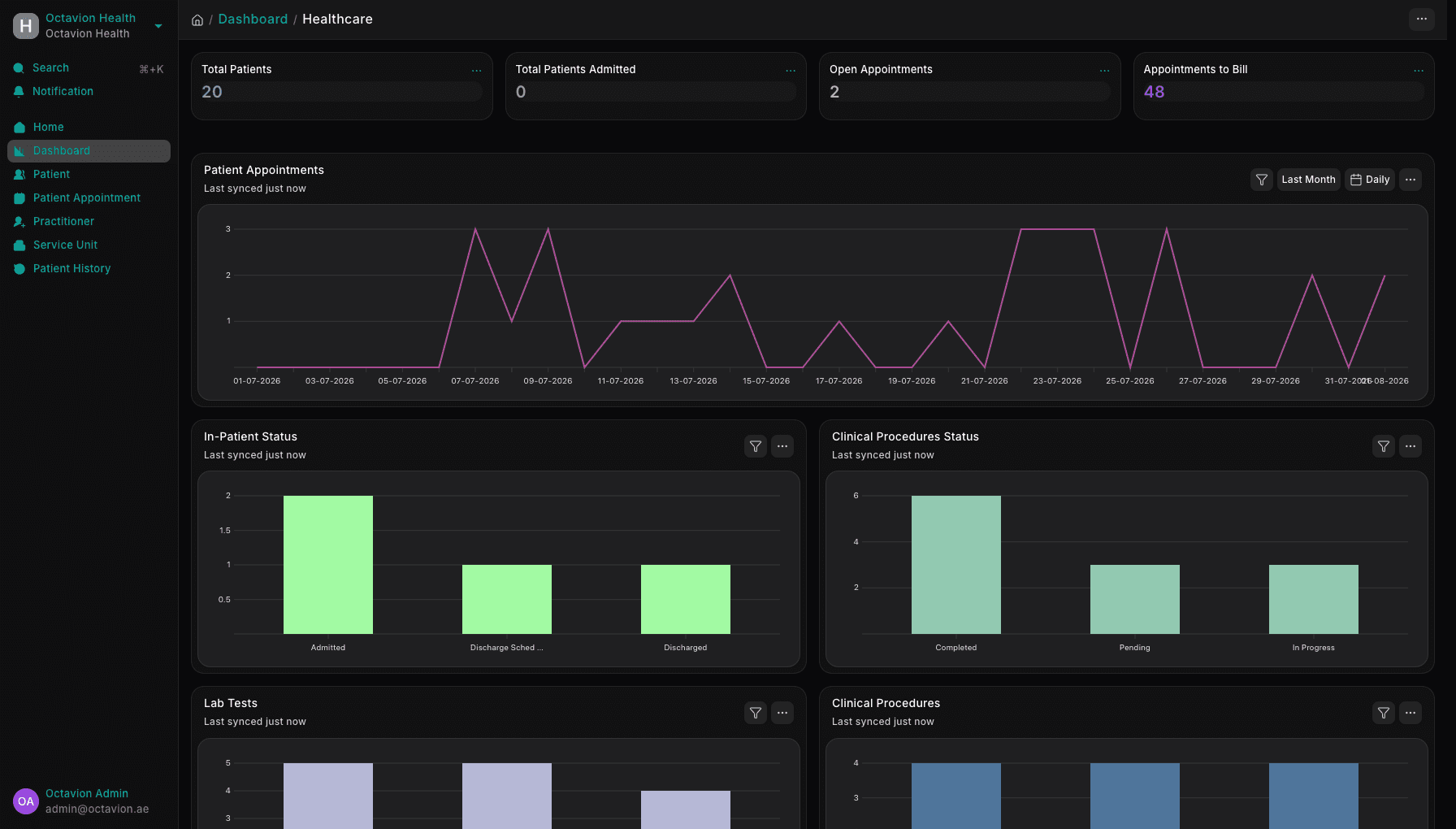
The second question is what hangs off the record. Demographics alone are a contact list. What makes it clinical is that the visit history, the prescriptions, the lab requests, the admission if there was one, and the money all point back to the same person. In the clinic and health app, patients, appointments, lab and inpatient records sit in one place, so "what happened with Mrs A?" is one screen rather than a call to three colleagues. Test the search with a messy, half-remembered query, in Arabic as well as English.
Be blunt about scope, though. A clinic system is no substitute for clinical judgement and will not fix a workflow nobody has agreed on. It removes the re-typing, the second spreadsheet and the hesitation before every answer — a specific claim, not a transformation. The complete feature breakdown lists what is and is not in the platform.

Appointments, reminders and the cost of a no-show
The diary is where clinic software earns or loses its keep. A schedule has to handle a doctor who works Tuesdays and Thursdays only, a room two practitioners share, a procedure that needs forty minutes rather than fifteen, and someone running late by 11am. What separates a usable diary from a frustrating one is how fast the desk can move an appointment while a patient stands in front of them, and whether moving it tells the doctor, the patient and the room.
No-shows deserve their own thinking. A missed appointment is not just a lost consultation fee; it is a slot that could have gone to the person you told to come back next week. Reminders are among the cheapest interventions, and here the channel matters more than the message. A message on WhatsApp through the official Meta Business Platform is far more likely to be seen than an SMS — and being two-way, patients reply to it, so cancellations arrive early enough to refill the slot.
Anything broader — a recall for annual check-ups, a seasonal vaccination push — is a different job, and email campaigns to your patient list handle it without turning your receptionist into a marketer. One caution: reminders only work when the number on the record is right — which brings us to the part clinics underestimate.
Why the phone line and the front desk are the same problem
Almost every clinic treats the telephone as infrastructure — something the office manager sorted once and nobody revisits. Yet a great many first contacts with new patients, and most cancellations, arrive down that line.
Consider an ordinary unanswered call. No record that it happened, no way to know whether the caller was a patient or a supplier, nothing to call back. The clinic has lost a patient and does not know it — the worst kind of loss, because it never appears in any report.
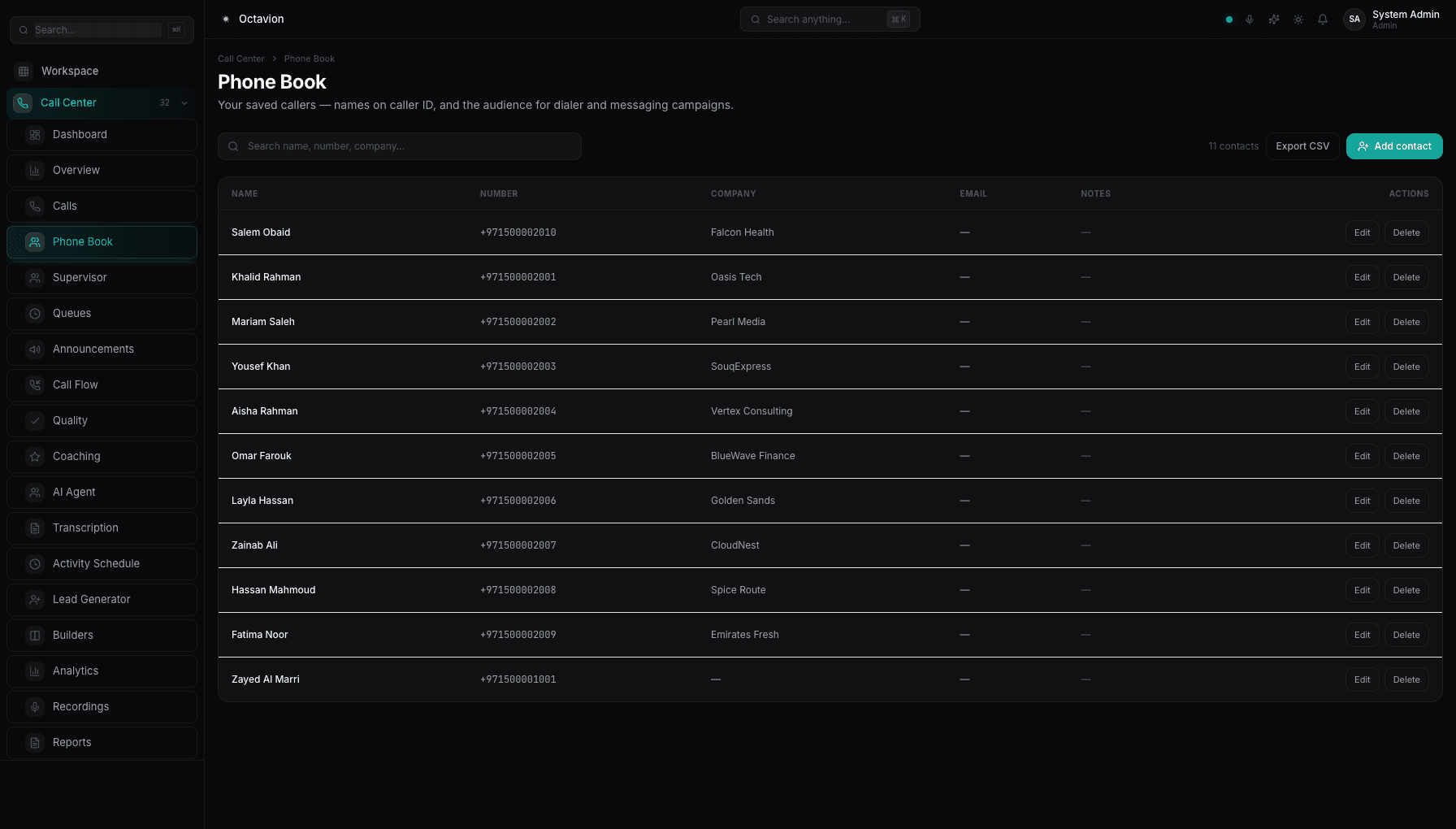
Now consider the same call where the phone is part of the clinic software, not beside it. The number is matched against the patient list, so the screen shows a name before anyone picks up. Unanswered, it still exists as a record, with a callback offered to the caller. Answered, it is recorded, transcribed and summarised. That is what a smart call centre with IVR, queues and recording does for a clinic: it turns a hole in your day into a list you can work through.
The logic runs the other way too. When the desk rings a patient back about a result, clicking the name beats reading digits off a screen — and the call logs itself against that person's timeline. That is how click-to-call in the CRM behaves: the call becomes part of the record rather than an invisible event. Listening in on a live call, or whispering an answer to a receptionist mid-call, also teaches you more about how your front desk sounds than any training document.
Lab results, inpatient flow and the follow-up nobody owns
Results are where clinics quietly leak trust. A sample goes out, a result comes back, and between those events sits an assumption that someone is watching. Usually one person is — and when that person is on leave, the watching stops.
What you want is unremarkable and essential: a request attached to a visit, a result attached to the request, and a state visibly not "done" until someone has seen it and acted. Putting lab into the same system as the patient record makes "outstanding results" a list on a screen rather than a habit in someone's head. The follow-up call has an owner on paper and none in practice; as a task on the result, it survives a shift change.
Inpatient work adds bed occupancy, daily notes and a discharge that must reconcile with billing. Smaller clinics may never touch it; day-surgery and multi-speciality centres live in it. Either way, the test is whether the admission reaches the invoice without anyone re-keying charges.
If patient queries are becoming their own workload — insurance questions, report requests, follow-ups after discharge — they are better tracked as cases than left in an inbox. Helpdesk with SLA timers and a customer portal exists for that, and it retires the question "did anyone reply to Mr B?"
Billing in AED, and where 5% VAT actually bites
Clinic billing looks simple until you look closely. One invoice can carry a consultation, a procedure, a dispensed item and a retail product — and those lines are not all treated the same way for 5% UAE VAT. Your accountant will tell you which is which for your licence and services; that is a professional judgement, not a software setting.
What the software has to do is let you set the treatment once per item and apply it every time, without the receptionist deciding. An invoice quietly wrong each month costs far more to unpick at year end than one wrong loudly on day one.
Underneath the clinic app, the money side is ordinary business accounting: invoices in AED, receivables, ageing, supplier bills, stock for consumables and dispensed items. That is what the accounting and inventory side of Smart ERP handles, so revenue never has to be exported to be understood. On the tax mechanics, we wrote a longer piece on what a VAT-ready ERP actually has to do in the UAE.
Two honest caveats. If most of your revenue arrives through insurers rather than patients, ask about that early — payer workflows are a distinct problem from cash billing. And staff costs are the other half of a clinic's finances: HR and payroll with WPS-ready files sits alongside the clinical side, so attendance, leave and the salary run stop being one person's spreadsheet.
What to ask before you commit to anything
Demos are designed to go well. The useful questions make one go badly, on purpose. Ask the salesperson to do these in front of you rather than describe them:
- Register a walk-in patient, book them into a slot that is already taken, and show what the system says about the clash.
- Take a call from a number already on the patient list and show what appears on screen before it is answered.
- Raise an invoice with two lines carrying different VAT treatments, then credit half of it.
- Show yesterday's no-shows, and what the system did to prevent them.
- Switch the interface to Arabic mid-task and carry on.
Then ask what has nothing to do with features. Who hosts it — this platform is hosted by us in the region, not installed on a machine in your back office, a difference to confirm with any vendor. What happens to your data if you leave, and in what format. How long onboarding takes, and who does it. Whether the price is per seat, and what a seat means when part-time doctors log in twice a week — the per-seat pricing in AED page states that plainly, and the product documentation is public if you would rather read first.
One more: ask whether staff can simply speak to the system. A voice-first AI assistant working in Arabic and English that reads live data and creates records is useful at a busy desk — and easy to demo, harder to rely on, so make it do your work in the accent your staff have.
Where to start
Take the unfashionable idea from this guide: the diary, the phone and the invoice are one system, and every hour your clinic loses is spent in the gaps between them. You do not have to move everything at once — most clinics start with patients and scheduling, add billing once the item list is clean, and connect the phone last.
There is a 7-day trial you can start today, with your own isolated tenant. Seven days is enough to run a real week through the diary and see whether the 9:40 problem shrinks. It is not enough to migrate five years of history — so test the workflow, not the migration. If it holds up, what a seat costs each month is published before you speak to anyone.